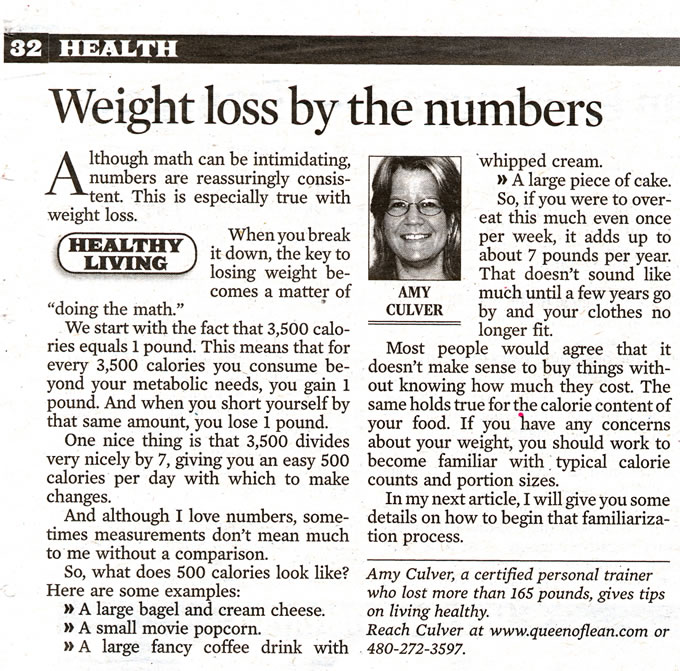
 Weight loss by the numbers Weight loss by the numbers
Although math can be intimidating, numbers are reassuringly consistent. This is especially true with weight loss.
When you break it down, the key to losing weight becomes a matter of "doing the math."
We start with the fact that 3,500 calories equals 1 pound. This means that for every 3,500 calories you consume beyond your metabolic needs, you gain 1 pound. And when you short yourself by that same amount, you lose 1 pound.
One nice thing is that 3,500 divides very nicely by 7, giving you an easy 500 calories per day with which to make changes.
And although I love numbers, sometimes measurements don't mean much to me without a comparison. For example, I have absolutely no idea how large a gigabyte is unless you tell me how many hours of music it would contain.
So, what does 500 calories look like? Here are some examples:
• A large bagel and cream cheese
• A small movie popcorn
• A large fancy coffee drink with whipped cream
• A large piece of cake
• 2 slices of pizza
So, if you were to overeat this much even once per week, it adds up to about 7 pounds per year. That doesn't sound like much until a few years go by and your clothes no longer fit. Unfortunately, many of us overeat those 500 calories more often than once per week.
Most people would agree that it doesn't make sense to buy things without knowing how much they cost. The same holds true for the calorie content of your food. If you have any concerns about your weight, you should work to become familiar with typical calorie counts and portion sizes.
In my next article, I will give you some details on how to begin that familiarization process.
|